Minnesota coronary survey 1968-73: enempi siemenöljyjä suurempi kuolleisuus, tutkimusta ei julkaistu kuin vasta 20 vuoden jälkeen koska tulos väärä. Kole laski ja kuolleisuus nousi. Myös enkelin nimi oli poistettu tutkijoista kun se julkaistiin
Sydney diet hart study 1973 sama tulos: ryhmä jossa käytettiin enemmän siemenöljyä oli huonommat tulokset cdv:n ja kuolleisuuden suhteen
Womens healt initiative 700miljoonan usd tutkimus: low fat siemenöljy ja vain7% tyydyttynyttä. kontrolliryhmällä parempi tulos ja tutkimuksessa piilotettiin se että jos oli jo sydänsairaus taustalla niin tilanne huononi entisestään. Piilotus tehtiin virheellisenä rivisiirtona jossa terveiden tulos esitettiin sydänpotilaan tuloksena. Tuosta jäätiin myöhemmin kiinni mutta sitä ei korjattu raporttiin.
Eli kyllä näitä vastakkaisia tuloksia löytyy mutta jostain syystä ne ei kelpaa tai niitä vääristellään. Sydänsairaudet on kasvaneet samaa tahtia kun siemenöljyt on tullut ihmisten ruokavalioon ja käyttö niiden prosentuaalinen käyttö kasvanut. Siitä vain siirtymään pelkästään siemenöljyihin ja onnea geenien suhteen sillä kai sitäkin makroa jotkut kestävät. Edes puska ei voinut enää 2010 jälkeen väittää että tyydyttyneet rasvat johtaa sydänsairauksiin tutkimuksiin perustuen.
Edelleen suositellaan korkean hiilarin dieettiä diabeetikoille mikä on aivan järjetöntä.
.
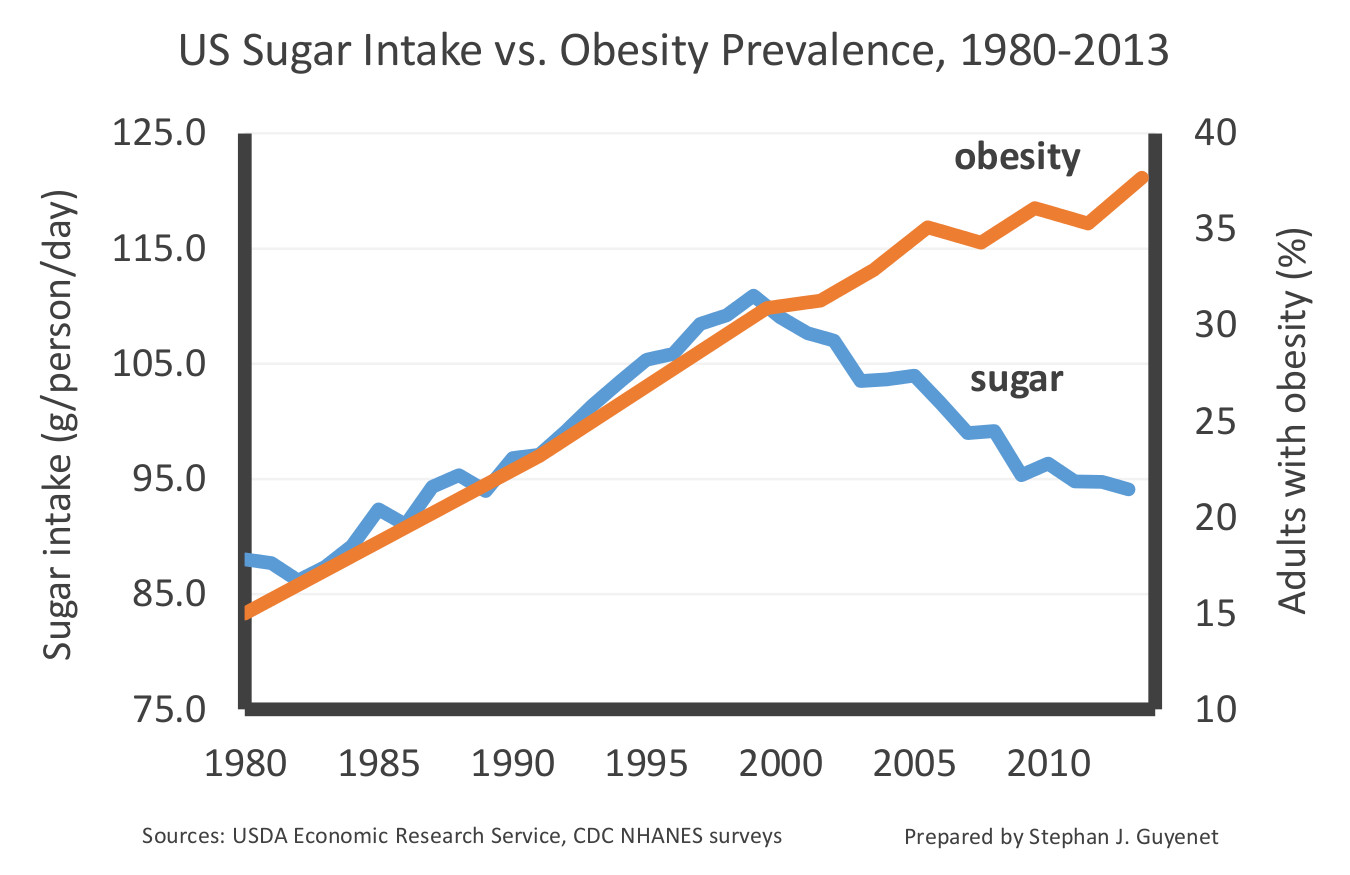
60-70 luvulla mm. margariineissa on ollu paljon transrasvoja. Ihan varmasti on kasvanu. Moni muu asia myöskin kasvanu vuosien varrella; kalorisaanti, rasvan saanti. Hiilarien ja sokerin saanti pienentyny.
We like explanations that are simple, easy to understand, and explain everything. One example of this is the idea that eating carbohydrate,...

wholehealthsource.blogspot.com
We like explanations that are simple, easy to understand, and explain everything. One example of this is the idea that eating carbohydrate,...
wholehealthsource.blogspot.com
Another study conducted at the University of Washington tested the effect of dietary fat restriction on calorie intake and body weight in 16 overweight people using very careful measurements. When they were transitioned to a low-fat diet (15%) and told to eat as much as they wanted, their daily calorie intake dropped by 291 calories and they steadily lost weight and body fat over a 12-week period, losing 8 lbs (3.8 kg) total. Importantly, their total carbohydrate intake
increased from 253 grams per day to 318 grams per day. Here’s the graph showing daily calorie intake and weight change (circles = calorie intake, diamonds = weight):
Blood lipids
Circulating lipoproteins influence cardiovascular disease risk, and LDL is a particularly important one.
Things that increase the number of LDL particles, and/or their total cholesterol cargo (called LDL cholesterol) tend to increase cardiovascular disease risk. The evidence supporting this is now extremely strong (1, 2). (312,321 participants)
As it turns out, butter increases LDL cholesterol and particle number more than most other fats (
3,
4,
5,
6). While butter also increases “good” HDL cholesterol, recent drug trials have questioned the causal relevance of increasing HDL cholesterol, meaning that it may not actually protect you from an increase in LDL cholesterol (
7).
Recent evidence suggests that the effect of dairy fat on LDL cholesterol depends heavily on the context in which the fat is delivered. Less refined forms of dairy such as yogurt, cheese, and cream have little effect on LDL cholesterol, even when they deliver the same amount of dairy fat as butter (
8,
9,
10,
11)! Some research suggests that this is due to a protective substance in less refined dairy foods called the
milk fat globule membrane, which is lost during the butter-making process (
12).


 . Mikään tutkimus ei liittyny ketoon mitenkään. Onhan toi ihan käsittämätöntä paskaa, että luonnollisien rasvojen sijaan pitäis syödä ihmisen kehittelemiä teollisia oljyjä.